
GTM Engineering for B2B Fintech: What to Automate First
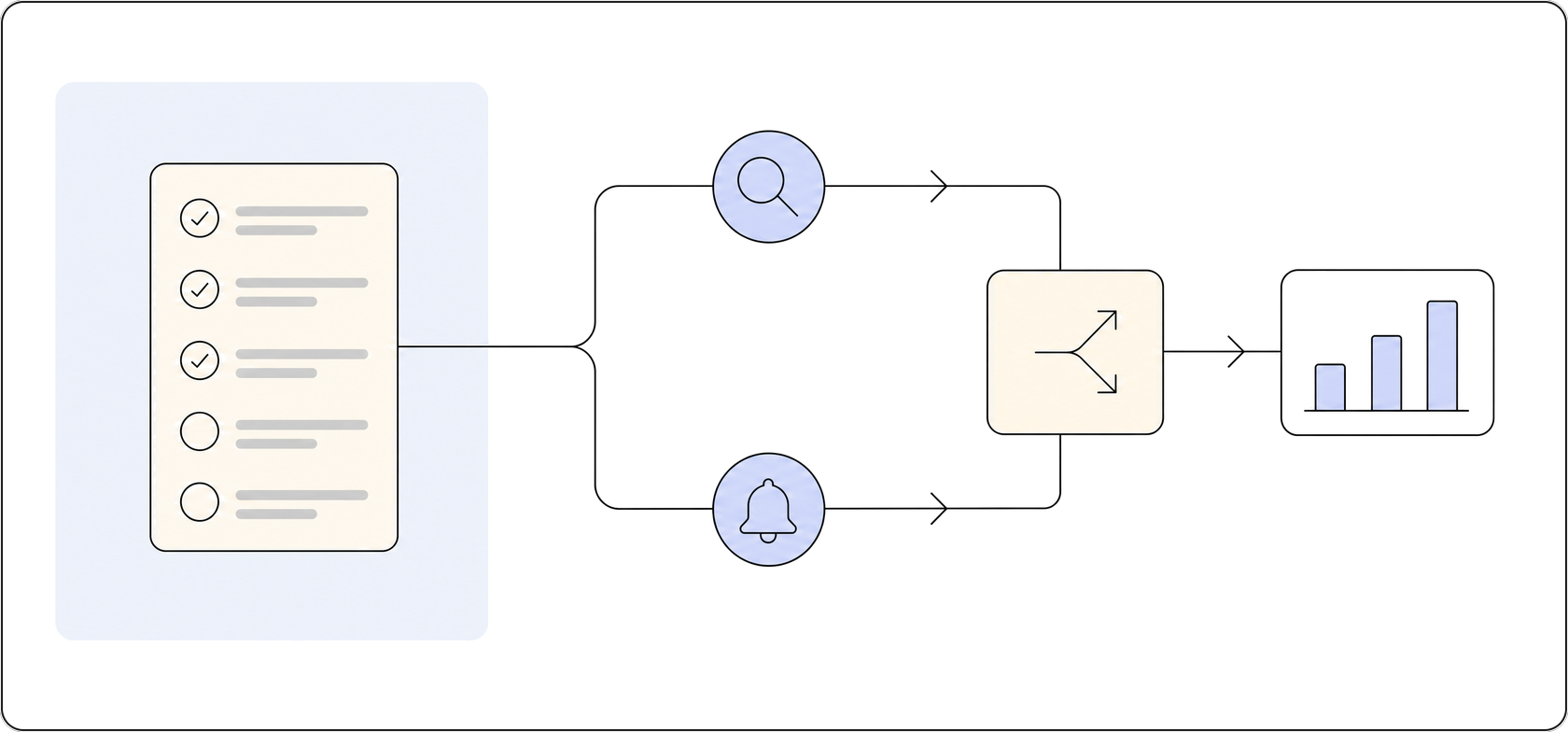
GTM engineering is the practice of running go-to-market on systems instead of manual effort. Data, automation and AI agents find the right accounts, research them, catch buying signals, route leads and keep the CRM accurate, so people spend their time in conversations.
For a B2B fintech, the first five things to automate are the account list, research before first calls, buying signals, inbound routing and pipeline reporting. In that order, and only after the positioning is clear.
What is GTM engineering?
GTM engineering applies engineering thinking to sales and marketing. Instead of hiring more people to research accounts, build lists and update the CRM, you build workflows that do it: connecting your CRM, data providers, email, LinkedIn and AI models into one system.
The person who does this is a GTM engineer. The role sits between RevOps, growth marketing and software development. They don’t write sales emails all day, and they don’t build the product. They build the machine that gets the product in front of the right buyers.
Interest in the role has grown fast. Monthly Google searches for “GTM engineer” went from about 8,100 to 27,100 between late 2025 and September 2026, and London alone had 179 open GTM engineer roles on Glassdoor in November 2026.
Why fintech needs a different approach
Most GTM engineering advice comes from SaaS, where the playbook is volume: big lists, many sequences, test and iterate. Fintech is different in four ways.
Your market is finite. If you sell to banks, PSPs or payment platforms, you can often name every company that could buy. That’s a list of thousands, not millions. Precision matters more than volume.
Sales cycles involve many people. A deal can need sign-off from payments, compliance, risk, finance and procurement. The research behind each account matters more than the number of emails sent.
Trust is the product. A badly targeted sequence to a head of payments at a bank gets remembered. Automation in fintech has to make outreach more relevant, not louder.
Teams are small. Most seed to Series B fintechs don’t have an SDR team. Automation does the research and preparation that a team would otherwise do, so founders and the first salespeople can focus on conversations.
GTM engineering, RevOps and SDRs
The roles overlap, which causes confusion when deciding who to hire.
| Role | Focus | What it produces |
|---|---|---|
| RevOps | Process, CRM, forecasting | An accurate pipeline and reliable numbers |
| GTM engineering | Automated workflows and AI agents | Accounts found, researched and routed without manual work |
| SDRs | Human outreach and qualification | Conversations and qualified meetings |
In a small fintech, one person often covers RevOps and GTM engineering. SDRs come later, and a good GTM system makes each one far more productive.
What to automate first
Automate in the order that makes each step useful to the next. These five workflows build on each other.
1. Build the account list once, then keep it fresh
Start with every company that fits your ideal customer profile: segment, size, region, licences, the payment methods or currencies they use. Score each account on fit. Then automate the upkeep: new companies added when they appear, closed or acquired ones removed, scores updated as data changes.
In fintech this list is usually small enough to get right. It becomes the foundation every other workflow reads from.
2. A research brief before every first call
An AI agent reads the company’s website, recent news, job postings and public filings, and writes a one-page brief before each first meeting: what they do, who they sell to, what they’ve announced recently, and where your product fits.
This is often the fastest win. It saves salespeople an hour of preparation per call, and the quality of first conversations goes up immediately.
3. Buying signals
Signals tell you when an account on your list is worth contacting now. In fintech, the useful ones are specific:
- Hiring: new roles in payments operations, compliance, treasury or partnerships
- Licences: a new e-money, payment institution or banking licence
- Expansion: launches in new markets or currencies
- Funding: a new round, which usually comes with a growth plan
- Leadership changes: a new head of payments or CFO, who will review existing providers
A workflow watches for these signals, matches them to your account list and alerts the right person with context, instead of a raw notification.
4. Inbound enrichment and routing
When someone fills in a form or books a demo, the lead is enriched automatically, scored against your ICP and routed to the right person with a short summary. Good inbound leads get a fast, informed reply. Poor-fit leads get a polite automated response, not an hour of someone’s time.
5. Pipeline reporting that updates itself
Finally, connect the CRM to reporting that refreshes on its own: leads, meetings and pipeline by channel and segment, every week. Without this, you can’t tell which of the first four workflows is working.
What not to automate yet
Some things should wait.
- Fully autonomous outreach to regulated buyers. AI can research and draft, but a person should review messages to banks and other regulated companies before they’re sent. More on this in AI SDRs for B2B fintech.
- Volume before positioning. Automation multiplies whatever it runs. If your positioning and messaging aren’t clear, it sends the wrong message to the wrong people faster. Settle the positioning first.
- Processes you haven’t done by hand. Run a workflow manually a few times until you know what good looks like. Then automate it.
A 30-day starting plan
You don’t need a big project to start.
- Week 1: write your ICP and positioning on one page, and audit the CRM fields you actually use.
- Week 2: build and score the account list.
- Week 3: launch research briefs and your first buying signal.
- Week 4: set up inbound routing and weekly reporting, then review what worked.
Start with the tools you already have: your CRM, a data or enrichment provider, a workflow automation tool and an AI model. Add tools only when a workflow needs them.
Where to go from here
GTM engineering works when it runs a clear go-to-market plan. Start by deciding who you’re for and what you say, ideally in a written positioning statement, then build the systems that put it to work.
That’s what Fuente Digital does for B2B fintech and payments companies: GTM strategy to set the plan, and GTM engineering to build the agents and automations that run it.
Frequently asked questions
Is GTM engineering the same as marketing automation?
No. Marketing automation usually means email nurture and lead scoring inside one platform. GTM engineering covers the whole go-to-market process, from account selection and research to signals, routing, outreach and reporting, across many tools.
Do we need to hire a GTM engineer?
Not at first. Many fintechs start with an external specialist who builds the first workflows and documents them, then hire once the system is running and needs a full-time owner.
How long does it take to see results?
Research briefs and inbound routing usually help within the first few weeks. Signal-based outreach and better reporting take longer, because they depend on a clean account list and a few weeks of data.