
How to Write a Positioning Statement for a B2B Fintech
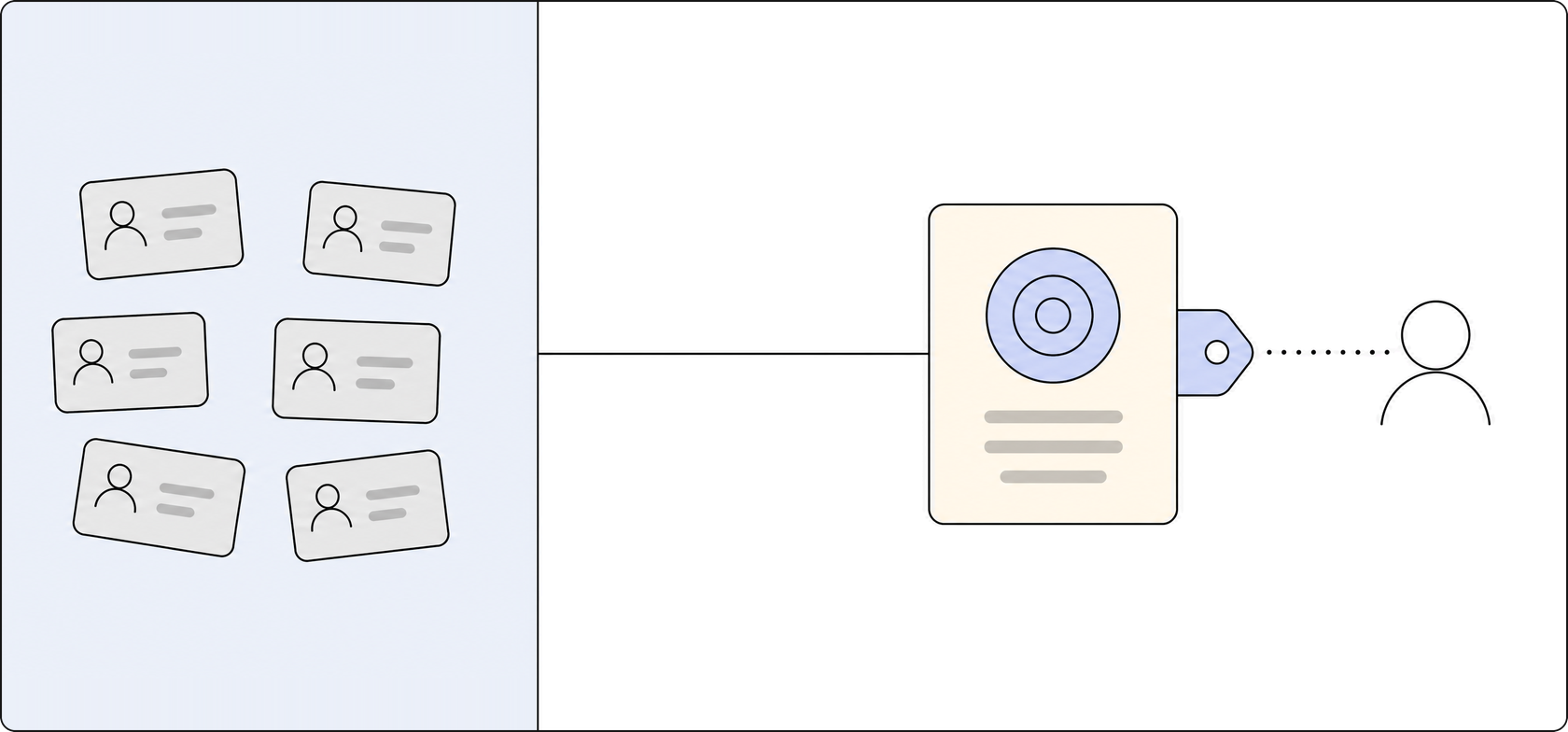
A positioning statement is a short internal sentence that says who your product is for, what they use today, and why you are the better choice. It isn’t a tagline. It’s the decision your website, sales deck, outbound and founder posts are all written from.
For a B2B fintech, a good positioning statement names a specific buyer, the alternative you replace (often a bank, a legacy provider or an internal team) and one difference that buyer can verify. If a competitor could sign the same sentence, it isn’t positioning yet.
What a positioning statement is, and what it isn’t
A positioning statement is written for your team, not your customers. It sets the boundaries that every piece of customer-facing copy has to stay inside.
It’s easy to confuse with three things that sit next to it:
| What it does | Who reads it | |
|---|---|---|
| Positioning statement | Decides who you’re for and why you win | Your team |
| Messaging | Turns that decision into headlines, value propositions and talk tracks | Buyers, through your website and sales |
| Tagline | Compresses the message into a few memorable words | Everyone |
| Mission statement | Says why the company exists | Employees, investors |
Positioning comes first. Messaging and taglines written without it tend to drift towards whatever sounds good that week.
Why positioning is harder in B2B fintech
Most positioning advice comes from SaaS. Fintech adds four problems.
Every competitor makes the same claims. Fast, secure, compliant, global, API-first. Buyers have read those words on every payments website, so they no longer separate anyone.
The product is often invisible. Infrastructure such as clearing, accounts, card issuing or payouts works in the background. You can’t demo a better settlement path the way you demo a dashboard, so the positioning has to explain a difference the buyer won’t see.
Several people buy. A deal can involve payments, compliance, finance, engineering and procurement. Each has a different alternative in mind and a different reason to say no.
Some claims are regulated. Words like bank, safeguarded, insured or instant can carry legal meaning. Positioning has to be sharp without promising more than your licences and contracts allow.
The five inputs you need first
A positioning statement is the output, not the starting point. Before writing it, settle five inputs. They follow April Dunford’s framework from Obviously Awesome, which works well for B2B.
| Input | The question | Fintech example |
|---|---|---|
| Competitive alternatives | What would customers do if you didn’t exist? | Wire payouts through their existing bank |
| Unique capabilities | What can you do that those alternatives can’t? | Local settlement in each market |
| Value | What does that capability give the customer? | Sellers paid the same day; fees known upfront |
| Best-fit customers | Who cares most about that value? | Marketplaces paying sellers in many countries |
| Market category | What frame makes your value obvious? | Payouts API, not “payments platform” |
The most important input is the first one. Your real competitor is usually not the fintech on the next stand at Money20/20. It’s the bank relationship, the spreadsheet, or the team of three doing it by hand. Positioning against the wrong alternative is the most common reason messaging falls flat.
The best source for all five is customer conversations: why they bought, what they compared you with, and what nearly stopped them.
A positioning statement template
Once the inputs are settled, a simple template turns them into one statement. This version is adapted from Geoffrey Moore’s in Crossing the Chasm:
For [best-fit customers] who [problem with the current alternative], [product] is a [market category] that [key value]. Unlike [competitive alternative], we [unique capability, with proof].
The template is a writing aid, not a format to publish. Its job is to force a decision in every slot.
Examples: before and after
Two fictional examples show the difference between a generic statement and a positioned one.
A payouts provider, before: “PayCo is a fast, secure and compliant global payments platform for businesses of all sizes.”
After: “For marketplaces paying sellers in more than 20 countries, who lose days and unpredictable fees to international wires, PayCo is a payouts API that settles locally in each market. Unlike paying out through a single bank, sellers are paid the same day and finance teams see every fee before they send.”
A compliance tool, before: “ScreenCo uses AI to make compliance simple.”
After: “For EU payment institutions whose analysts spend most of their day clearing false positives, ScreenCo is a sanctions screening engine tuned for payments data. Unlike general-purpose screening tools, it cuts false-positive alerts on payment messages, so the same team can review more volume without hiring.”
The “after” versions are longer and less exciting. That’s fine. They are decisions, and decisions are what the copy team needs.
Five tests for your statement
Before you use it, check the statement against five tests.
- The competitor test. Swap in a competitor’s name. If the sentence still works, it isn’t specific enough.
- The exclusion test. It should rule some customers out. If it fits everyone, it guides nothing.
- The alternative test. It names what the buyer does today, in the buyer’s words.
- The proof test. Every claim in it can be backed by a number, a customer or a product fact.
- The sales test. A salesperson can say it out loud on a first call without it sounding like a brochure.
From statement to messaging framework
The positioning statement is one sentence for the whole company. A messaging framework turns it into what each buyer needs to hear. For B2B fintech, build it per role:
| Buyer | What they care about | What the message leads with |
|---|---|---|
| Head of payments | Coverage, speed, reliability | Markets and payment methods covered, settlement times |
| Compliance | Risk, licences, audit trail | How funds are held, who is regulated for what |
| Finance | Cost, cash and reconciliation | Fee transparency, cash visibility, fewer manual steps |
| Engineering | Integration effort | API quality, documentation, time to first transaction |
Each row gets a value proposition, two or three proof points and answers to the objections that role raises. The positioning stays the same; the emphasis changes.
Common mistakes
- Leading with technology. “AI-powered” or “blockchain-based” describes how, not why. Buyers buy outcomes.
- Positioning against other startups. Most of your deals are lost to doing nothing or staying with the bank.
- Too many segments. A statement written for banks, fintechs and enterprises at once is written for none of them.
- Never using it. A positioning statement in a slide deck nobody opens changes nothing. It has to reach the website, the deck, outbound and how AI assistants describe you.
Where to go from here
Positioning is the first step of any go-to-market strategy. Get it right and the website, the sales deck and the outbound almost write themselves. Get it wrong and automation only spreads the wrong message faster, as covered in GTM engineering for B2B fintech.
Fuente Digital runs a fixed-price positioning sprint for B2B fintech and payments companies: customer interviews, one decision session, then the positioning statement, messaging framework and narrative. It’s also the first step of a full GTM strategy.
Frequently asked questions
How long should a positioning statement be?
One to three sentences. It needs enough room to name the customer, the alternative, the category, the value and the difference. If it runs longer, some of it belongs in the messaging framework.
Should the positioning statement go on our website?
Not word for word. It’s an internal document. Your homepage headline and copy should be written from it, in plainer and shorter language.
How often should we revisit our positioning?
When something important changes: a new segment, a new product, a new licence, a funding round or a competitor that changes what buyers compare you with. Otherwise, review it once a year against what sales hears on calls.
What is the difference between positioning and a value proposition?
Positioning decides who you’re for and why you win against their alternative. A value proposition is one part of the messaging built on it: the main benefit, stated for a specific buyer.