
AI SDRs for B2B Fintech: What They Can and Can’t Do
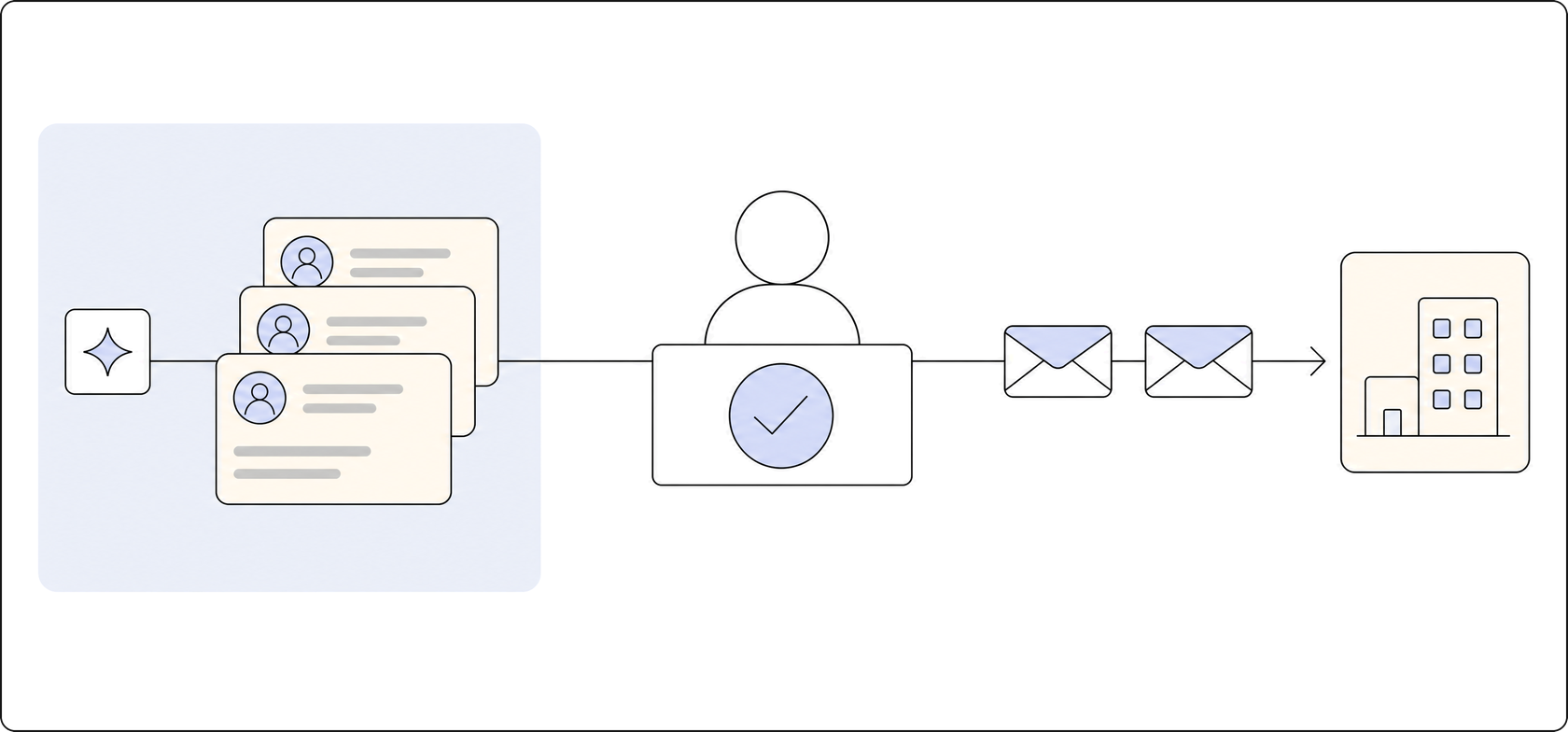
An AI SDR is software that does the work of a sales development rep: it researches accounts, writes and sends outreach, handles replies and books meetings, with little or no human input. For most B2B fintechs, it works best as a research and drafting assistant with a person approving what goes out, not as a fully autonomous sender.
AI SDRs promise pipeline without hiring a team, and for some companies they deliver. Fintech is a harder case. The market is small, buyers are senior and cautious, and a badly judged message to a bank or payment provider is remembered. This guide covers what AI SDRs do well, where they fail, the three ways to use them, and how to test one without risking your reputation.
What an AI SDR actually does
Most AI SDR tools combine several jobs. They are not equally good at all of them.
| Task | How well AI handles it | In B2B fintech |
|---|---|---|
| Researching accounts | Strong | Useful: summarising news, hiring, funding and products saves hours |
| Finding and enriching contacts | Good | Depends on data quality; check titles and seniority |
| Drafting first messages | Good with context | Needs your positioning and a real reason to write now |
| Sending sequences on its own | Risky | Mistakes reach senior buyers in a small market |
| Handling replies | Mixed | Fine for scheduling, weak on technical or compliance questions |
| Qualifying leads | Mixed | Can apply simple rules; misses nuance in large deals |
| Booking meetings | Good | Saves time once a buyer has said yes |
The pattern is clear: AI is strongest before and after the human conversation, and weakest at deciding what to say to a senior buyer for the first time.
Why fintech is a harder case
The market is small. If you sell to a few hundred banks, payment providers or platforms, every badly targeted message burns an account you may need next year. Volume tactics that work in a market of millions don’t transfer.
Buyers are senior and cautious. Heads of payments, compliance and finance get plenty of automated outreach. Generic messages are easy to spot and rarely answered.
Claims carry weight. Words like instant, guaranteed, safeguarded or regulated can mean something specific in financial services. An AI writing at scale can make claims your product and licences don’t support.
Data rules apply. Contact data and outreach fall under data protection rules such as GDPR. Make sure any tool you use handles data, consent and opt-outs properly for the countries you sell into, and check with your own advisers.
Three ways to use AI in sales development
| Model | How it works | Good for | Watch out for |
|---|---|---|---|
| Autonomous AI SDR | The tool researches, writes, sends and replies on its own | High-volume, lower-value segments | Reputation, deliverability, wrong claims |
| AI-assisted human SDR | AI researches and drafts; a person edits and sends | Most B2B fintechs | Needs someone with time to review |
| AI research, human outreach | AI prepares briefs and signals; people write everything | Enterprise and bank buyers | Slower, but the safest for senior buyers |
For most B2B fintechs, the middle model gives the best balance: most of the time saved, without handing first impressions to software.
Where AI SDRs work well in fintech
- Research before outreach. A one-page brief on every target account, refreshed when something changes.
- Speed on inbound. Replying to a demo request within minutes, enriching the lead and routing it to the right person.
- Re-engaging old leads. Reaching companies that went quiet months ago, when a new trigger appears.
- Lower-value, higher-volume segments. Smaller merchants or businesses where deal sizes don’t justify a person’s time on every account.
- Admin after the yes. Scheduling, reminders and CRM updates once a buyer has agreed to talk.
Where they backfire
- First contact with bank and enterprise buyers. These relationships are worth too much to start with an automated message.
- Technical or compliance questions. A wrong answer about how funds are held or which licences apply costs more than a slow one.
- Thin positioning. AI multiplies whatever message you give it. If the positioning is vague, it sends vague messages faster. Settle the positioning first.
- No clear ICP. Without a scored ideal customer profile, an AI SDR will happily contact anyone who matches a job title.
How to evaluate an AI SDR tool
Before you sign up, check:
- Control: can you approve messages before they’re sent, set rules and block topics or claims?
- Data: where do the contacts and research come from, and how fresh is it?
- Deliverability: does it manage sending volumes, domains and warm-up, or leave that to you?
- CRM integration: does every touch, reply and meeting land in your CRM?
- Data handling: how does it manage consent, opt-outs and data storage for your markets?
- Reporting: can it report meetings and pipeline from target accounts, not just emails sent?
- Pricing model: per seat, per contact or per meeting booked, and what that costs at your volume.
Run a safe 30-day pilot
- Pick one segment. Choose a lower-risk part of your ICP, not your most valuable accounts.
- Keep a human in the loop. Approve every message for the first month, and note what you change.
- Cap the volume. Start small enough that a mistake is contained.
- Measure the right things. Positive replies, meetings with accounts that fit, pipeline created, unsubscribes and spam complaints.
- Decide with data. If the pilot creates pipeline without hurting replies or reputation, widen it slowly. If it doesn’t, keep the research and drafting and drop the autonomous sending.
Where to go from here
AI SDRs are one part of a larger system: account lists, research, signals, routing and reporting. That system is covered in GTM engineering for B2B fintech, and outbound as a channel in B2B lead generation for fintech.
Fuente Digital builds AI-assisted outbound for B2B fintech and payments companies, with humans approving what reaches senior buyers, as part of GTM engineering.
Frequently asked questions
What is an AI SDR?
An AI SDR is software that automates sales development work: researching target accounts, finding contacts, writing and sending outreach, handling replies and booking meetings.
Will AI SDRs replace human SDRs?
For research, drafting and admin, AI already does much of the work. For first contact with senior, cautious buyers, and for nuanced conversations, people still do better. Most teams end up with fewer SDRs who each cover more accounts with AI support.
Do AI SDRs work for fintech companies?
They work well for research, inbound speed and lower-value segments. For banks, enterprise buyers and anything involving regulatory claims, use AI to research and draft, and keep a person in charge of what is sent.
How much do AI SDR tools cost?
Pricing models vary: per seat, per contact processed or per meeting booked. Compare the cost per qualified meeting at your expected volume, not the headline price.