
Account-Based Marketing for B2B Fintech: A Practical Guide
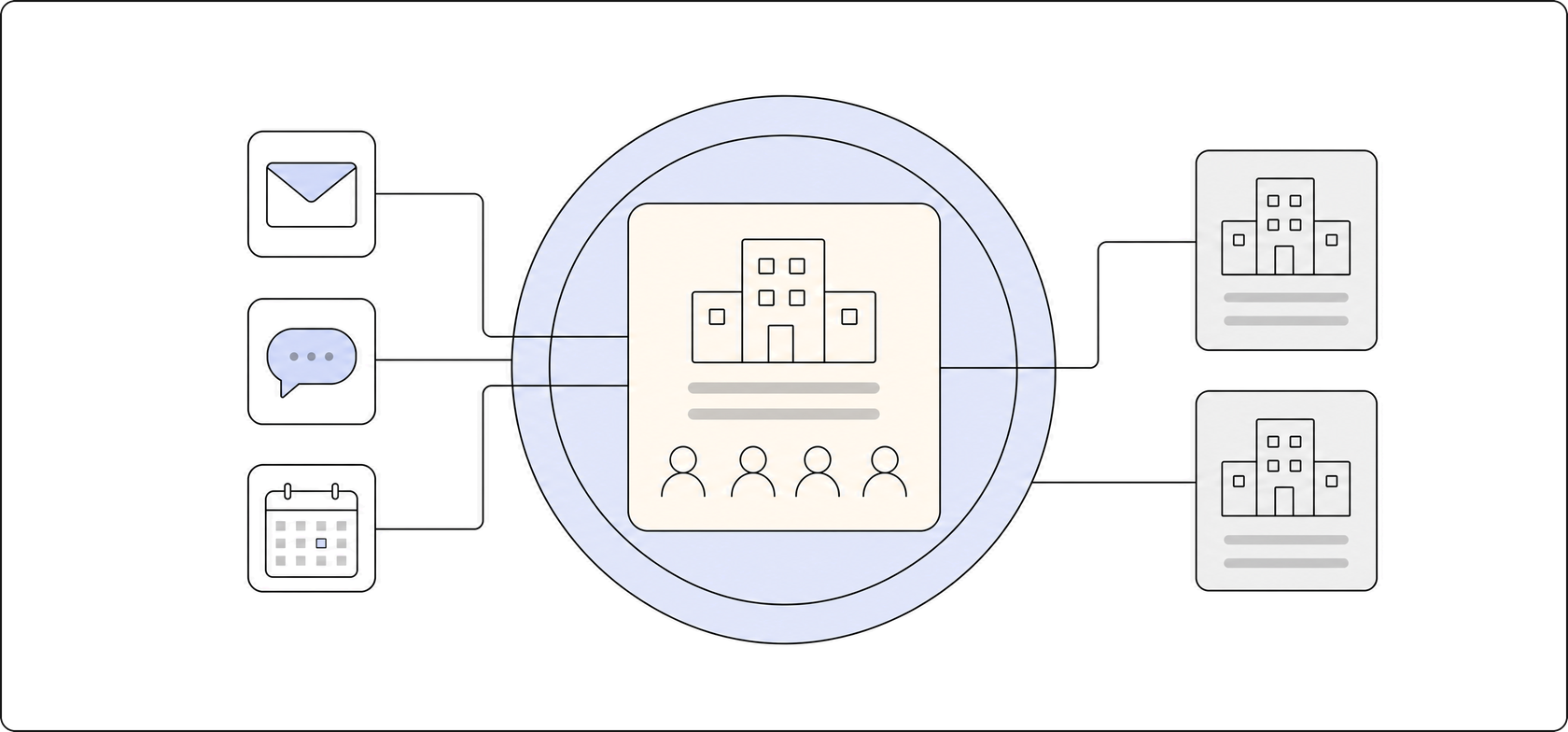
Account-based marketing (ABM) is a B2B approach where sales and marketing choose a named list of target companies and run coordinated, personalised campaigns to win them, instead of generating as many leads as possible. Success is measured in engaged accounts and pipeline, not lead volume.
ABM suits B2B fintech unusually well. The market is small enough to name, deals are large, and every purchase involves a buying committee that needs proof before it trusts a new provider. This guide covers how to choose accounts, the three levels of ABM, how to run a programme and how to measure it.
Why ABM fits B2B fintech
You can name your market. If you sell to banks, payment service providers or platforms, the list of companies that could buy is often in the hundreds or low thousands. Broad lead generation wastes most of its reach.
Deals are large and slow. One customer can be worth a year of smaller deals, and sales cycles run for months. That justifies research and personal attention per account.
Many people decide. Payments, finance, compliance, engineering and procurement are often all involved. ABM reaches the whole committee, not only the person who filled in a form.
Trust decides the deal. Buyers want relevant references, security documentation and evidence you understand their business. Personalised, well-researched outreach builds that; generic sequences damage it.
ABM compared with traditional demand generation
| Demand generation | Account-based marketing | |
|---|---|---|
| Starting point | A broad audience | A named list of accounts |
| Goal | As many qualified leads as possible | Engagement and pipeline in chosen accounts |
| Personalisation | By segment or persona | By account, sometimes by person |
| Sales involvement | Takes leads once qualified | Plans and runs the programme with marketing |
| Main measure | Leads and cost per lead | Account engagement, meetings and pipeline |
Most B2B fintechs need both. Demand generation catches companies you didn’t know were looking; ABM wins the accounts you already know you want.
The three levels of ABM
ABM isn’t one tactic. It runs at three levels of depth, and most programmes use all three.
| Level | Accounts | Personalisation | Best for |
|---|---|---|---|
| One-to-one | 5 to 15 | Fully tailored to each account | Your largest, best-fit targets |
| One-to-few | 15 to 100, in small clusters | Tailored to a cluster with a shared need | Segments such as “marketplaces expanding into new markets” |
| One-to-many | Hundreds | Light, based on segment and signals | The rest of your ideal customer profile |
These ranges are a starting point, not a rule. The right number is the number your team can give genuine attention to.
How to run an ABM programme
1. Choose the accounts
Start from your ideal customer profile and its scoring. Tier 1 accounts go into one-to-one, Tier 2 into one-to-few clusters, Tier 3 into one-to-many. Sales should agree the list, because they will work it.
2. Map the buying committee
For each one-to-one and one-to-few account, list the people involved and what each cares about. A head of payments wants coverage and reliability; compliance wants to know how funds are held; finance wants cost and reconciliation. Note who you already know and who can say no.
3. Find the angle for each account
Research what is happening at the account: new markets, funding, hiring, product launches, leadership changes, and the provider they use today. The angle is the reason this account should talk to you now. Without it, ABM is just targeted spam.
4. Plan the plays
A play is a coordinated sequence across channels, built around the angle. Typical channels in B2B fintech are personal outreach from sales and founders, LinkedIn, targeted ads, events and roundtables, and tailored content such as a relevant case study or a short analysis of the account’s situation.
5. Run it with sales
ABM fails when marketing runs it alone. Share one account list, meet weekly to review engagement, and agree who does what in each account. Marketing creates the conditions; sales has the conversations.
6. Measure accounts, not leads
Track how many target accounts you reach, how many engage, how many take meetings and how much pipeline comes from the list. Compare win rates and deal sizes against accounts outside the programme.
An example play
A fictional example, for a payouts provider targeting marketplaces:
- Trigger: a target marketplace announces expansion into three new countries.
- Research: a one-page brief on the expansion, the likely payout corridors and their current provider.
- Outreach: a short, specific note from the founder to the head of payments, plus a connection request on LinkedIn.
- Committee: a relevant case study sent to finance, and a security overview offered to compliance.
- Invitation: a seat at a small roundtable on cross-border payouts.
Each step uses the same angle, so the account hears one coherent message from several directions.
Where automation helps, and where it doesn’t
Much of the groundwork can be automated: building and scoring the account list, watching for triggers, writing research briefs, enriching contacts and reporting on account engagement. That’s covered in GTM engineering for B2B fintech.
The judgement can’t. Choosing the angle, writing the message to a senior buyer and having the conversation should stay with people, especially when the buyer is regulated.
Common mistakes
- Too many accounts. A one-to-one list of 200 means no account gets real attention.
- ABM as an ad campaign. Targeted ads alone rarely move a fintech buying committee.
- Marketing working alone. Without sales agreeing the list and running the conversations, ABM produces engagement but no pipeline.
- Measuring leads. A target account that takes three meetings matters more than a hundred downloads from outside the list.
- No proof to share. Personalised outreach needs relevant case studies, references and documents behind it.
Where to go from here
ABM works best inside a clear go-to-market strategy: a defined ICP, sharp positioning and agreed pipeline targets. Fuente Digital sets that up for B2B fintech and payments companies through GTM strategy, and builds the research, signals and reporting behind it through GTM engineering.
Frequently asked questions
What is the difference between ABM and account-based selling?
Account-based selling is the sales side: researching and working named accounts one by one. Account-based marketing is the coordinated programme around it, where marketing supports those accounts with content, ads, events and insight. In practice they work best as one effort.
How many accounts should an ABM programme target?
As many as your team can give real attention to. A common start is 10 to 15 one-to-one accounts, a few clusters of one-to-few accounts and a wider one-to-many list from your ICP.
How long does ABM take to show results?
Engagement usually shows within the first month or two. Pipeline takes longer, roughly one sales cycle, which in B2B fintech is often several months.
Do you need ABM software?
Not to start. A CRM, a data provider, LinkedIn and a shared account list are enough for a first programme. Add dedicated tools once you know which plays work.