
How to Build an Ideal Customer Profile for B2B Fintech (With Template)
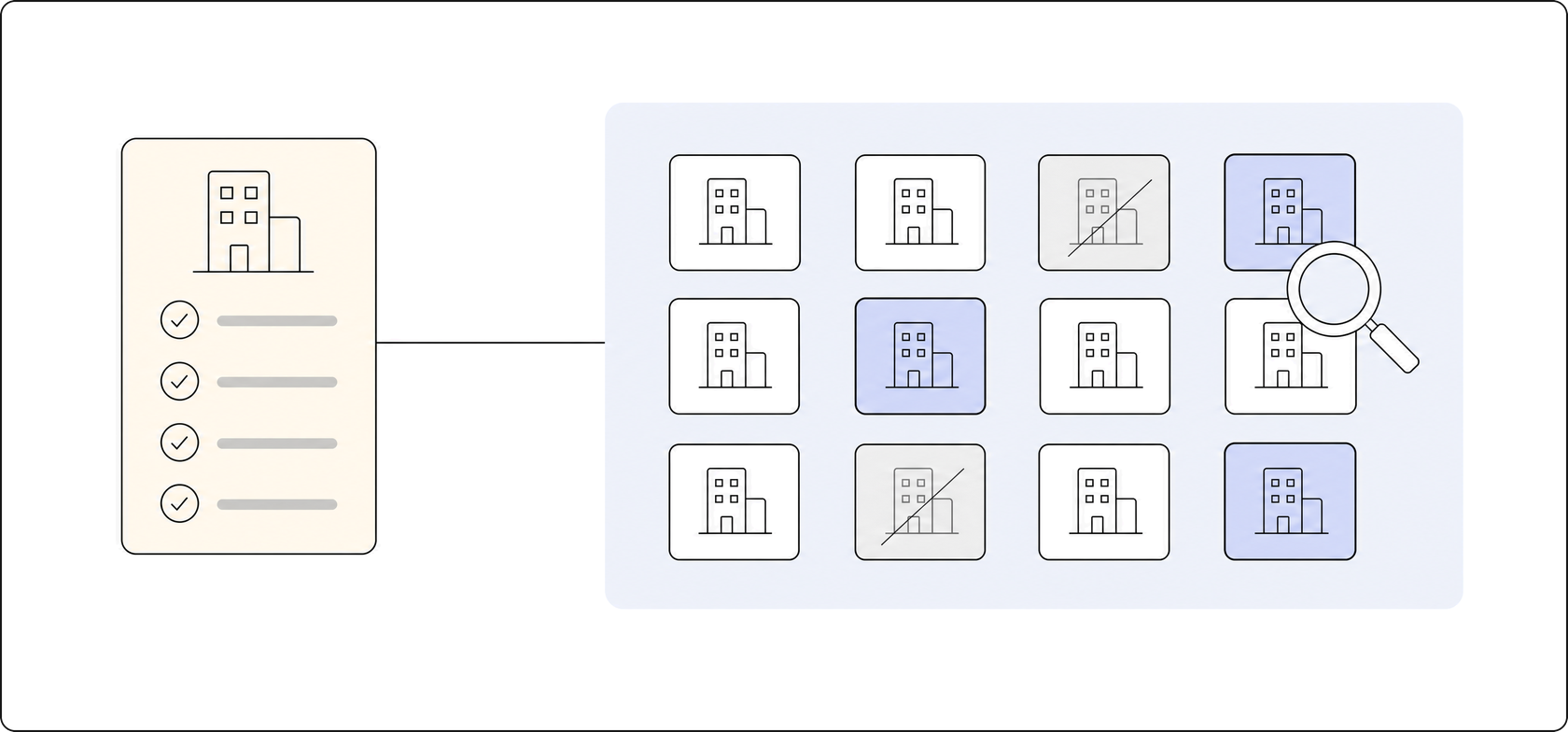
An ideal customer profile (ICP) describes the companies most likely to buy from you, get value quickly and stay: who they are, what they use today, what triggers a purchase and who signs off. It decides which accounts your sales and marketing spend time on.
For a B2B fintech, a useful ICP goes further than industry and company size. It includes the payment flows a company runs, its licences and providers, the regions you can legally serve, and the customers your compliance team will turn away. This guide covers what to include, how to build it, and how to score accounts against it.
Ideal customer profile, buyer persona and target market
The three terms are often mixed up. They describe different things.
| What it describes | Example | |
|---|---|---|
| Target market | Everyone who could buy | Payment platforms in Europe |
| Ideal customer profile | The companies you win most often and serve best | Marketplaces paying out to sellers in 10+ countries |
| Buyer persona | A person inside those companies | The head of payments who owns provider choice |
You need all three, in that order. The ICP narrows the market to the right companies. Personas tell you what to say to the people inside them.
What a B2B fintech ICP includes
Most ICP templates stop at industry, size and region. Fintech needs more, because the product depends on money flows, regulation and risk.
Firmographics. Segment, business model, size (revenue, transaction volume or headcount) and region.
Payment and money flows. The currencies, corridors, payment methods and volumes the company handles. These often predict fit better than company size.
Current setup. The bank, provider or internal team doing the job today, and its known limits. This is the alternative you replace, and it shapes your positioning.
Regulatory profile. The company’s licences, and whether it sits in a sector or region you can serve. Some customers are a perfect commercial fit and still out of scope for your licence or your banking partners.
Triggers. The events that make a company look for a provider now: a new market, a funding round, a new head of payments, a provider exit or a regulatory change.
Buying committee. Who is involved in the decision, typically payments or product, finance, compliance, engineering and procurement, and who can say no.
How to build your ideal customer profile
1. Start from your best and worst customers
List your ten best customers and five that didn’t work out. Best means they bought quickly, use the product fully and would recommend you. For each, note the attributes above. Patterns appear fast.
Before you have customers, use the closest evidence available: design partners, pilots, late-stage deals and the companies that took second meetings.
2. Talk to customers about why they bought
Data shows who buys; conversations show why. Ask a handful of customers what they used before, what made them look, who was involved and what nearly stopped them. The answers become your triggers, your buying committee and your messaging.
3. Write fit criteria and disqualifiers
Turn the patterns into a short list of must-haves and nice-to-haves. Then write the disqualifiers: the companies you should not pursue, however keen they are.
In fintech, disqualifiers matter as much as fit. Typical ones are sectors your licence or banking partners exclude, regions outside your regulatory perimeter, volumes too small to be profitable, and use cases your product doesn’t support yet.
4. Score and tier the accounts
Give each criterion a weight, score every account in your market and sort them into tiers. Tier 1 gets research, personal outreach and senior time. Tier 3 gets light-touch marketing. The next section shows a simple model.
5. Test it against your pipeline
An ICP is a hypothesis until the pipeline confirms it. After a quarter, compare win rates, deal sizes and sales cycles by tier. If Tier 1 doesn’t win more often than Tier 3, the weights are wrong.
A simple ICP scoring model
Keep the first version simple enough to fill in from public data. This illustrative model is for a fictional payouts provider; replace the criteria and points with your own.
| Criterion | Points |
|---|---|
| Pays out to sellers or contractors in 10+ countries | 30 |
| Monthly payout volume above your profitability threshold | 25 |
| Currently pays out through bank wires or a single bank | 20 |
| A recent trigger (funding, new market, new payments lead) | 15 |
| Operates in a sector and region you can serve | Required |
| On the exclusion list of your banking partners | Disqualified |
Accounts scoring 70 or more are Tier 1, 40 to 69 Tier 2, and below 40 Tier 3. The required and disqualifying rows sit outside the points, so a high score can never override a compliance rule.
Ideal customer profile template
Fill in each line in a sentence or two:
- Segment and business model: what the company does and how it makes money
- Size: the revenue, volume or headcount range that fits
- Region: where they operate, and where you can legally serve them
- Money flows: currencies, corridors, payment methods and volumes
- Current setup: the provider, bank or internal process you replace
- Triggers: the events that start a search
- Buying committee: the roles involved, and who can say no
- Disqualifiers: the companies you won’t pursue, and why
- Evidence: the customers this profile is based on
If you can’t name at least three real customers or late-stage deals behind the profile, treat it as a hypothesis and test it before building a whole plan on it.
Common mistakes
- An ICP that fits everyone. “Fintechs and banks of all sizes” rules nothing out, so it guides nothing.
- Only firmographics. Industry and size are easy to filter on but rarely explain why a company buys.
- No disqualifiers. Sales spends months on deals compliance would never approve.
- Writing it once. Markets, licences and products change. Review the ICP every quarter against the pipeline.
Putting the ICP to work
An ICP earns its keep when it drives daily work. It’s the basis for your account list and scoring, account-based marketing, the routing of inbound leads, the buying signals you watch and the messaging for each persona. Most of that can be automated, as covered in GTM engineering for B2B fintech.
The ICP is also the second step of a go-to-market strategy. Fuente Digital builds both for B2B fintech and payments companies, as part of a GTM strategy or a shorter positioning sprint.
Frequently asked questions
What is the difference between an ICP and a buyer persona?
An ICP describes companies: the type of business most likely to buy and succeed with you. A buyer persona describes a person inside those companies, such as a head of payments or a CFO, and what they care about.
How many ideal customer profiles should a company have?
Start with one. Early-stage companies win by focusing on a single segment. Add a second profile only once the first is producing pipeline predictably.
What data do you need to build an ICP?
Your customer and deal data from the CRM, a handful of customer interviews, and public data on the wider market such as company size, funding, hiring and the providers companies use.
How often should you update your ideal customer profile?
Review it every quarter against win rates and deal sizes by tier, and rewrite it when something important changes, such as a new product, licence or market.